

Kapville Energy offers specialized consulting services in management and productive efficiency for energy and mining operations, with a practical and results-oriented approach that combines in-depth technical diagnosis, implementation of improvements, and training of local teams. We recognize that productivity in the extractive sector is determined by multiple interrelated factors – equipment availability, process efficiency, materials management, workforce competence, and quality of operational decisions – and we act in an integrated manner across all these dimensions.
Our work begins with a comprehensive diagnosis that maps the current state of operations: analysis of production histories, assessment of availability and reliability of critical equipment, identification of bottlenecks in the production process, review of maintenance practices, analysis of unplanned downtime data, and evaluation of the efficiency in the use of inputs (energy, water, reagents, fuels). We use tools such as root cause analysis (RCA), time and motion studies, industry benchmarking, and process modeling to identify the greatest opportunities for improvement.
Kapville Energy offers specialized consulting services in management and productive efficiency for energy and mining operations, with a practical and results-oriented approach that combines in-depth technical diagnosis, implementation of improvements, and training of local teams. We recognize that productivity in the extractive sector is determined by multiple interrelated factors – equipment availability, process efficiency, materials management, workforce competence, and quality of operational decisions – and we act in an integrated manner across all these dimensions.
Our work begins with a comprehensive diagnosis that maps the current state of operations: analysis of production histories, assessment of availability and reliability of critical equipment, identification of bottlenecks in the production process, review of maintenance practices, analysis of unplanned downtime data, and evaluation of the efficiency in the use of inputs (energy, water, reagents, fuels). We use tools such as root cause analysis (RCA), time and motion studies, industry benchmarking, and process modeling to identify the greatest opportunities for improvement.
Kapville Energy offers specialized regulatory compliance consulting for companies in the energy and mining sectors, focusing on transforming regulatory complexity into a competitive advantage through structured systems, efficient processes, and strategic relationships with regulatory bodies. We recognize that compliance in the extractive sector involves multiple interrelated dimensions – environmental, labor, tax, sectoral, occupational health and safety – and that failures in any one of them can result in significant fines, operational shutdowns, and irreparable reputational damage.
Our work begins with a complete mapping of the legal framework applicable to the client’s operation, including federal, state, and municipal laws, technical standards, regulatory agency resolutions, collective bargaining agreements, and contractual obligations. We develop compliance matrices that cross-reference each legal requirement with the company’s existing processes, documents, and evidence, identifying gaps, inconsistencies, and areas of risk. We conduct compliance audits that assess not only the existence of documents but also the effectiveness of the implementation of the required controls.
We develop customized compliance plans that prioritize critical actions, define realistic deadlines, allocate responsibilities, and estimate necessary resources. We support the implementation of these plans through: the creation of standard operating procedures (SOPs) and work instructions, the development of verification forms and checklists, the creation of document management systems, team training on applicable requirements, and the conducting of simulations and internal audits. We work with integrated management systems that align environmental compliance (ISO 14001), occupational safety (ISO 45001), and quality (ISO 9001).
We offer ongoing support in managing regulatory relationships , including: preparation and submission of mandatory reports, monitoring of licensing processes, technical representation in meetings with environmental and sectoral bodies, response to notifications and fines, and negotiation of conduct adjustment agreements (TACs). We develop proactive monitoring systems for legislative changes that allow companies to anticipate new requirements and adapt in an orderly manner.
We implement technology-based compliance management systems with dashboards that show the status of each obligation, automatic alerts for deadlines, a centralized document repository, and management reports that allow leadership to have complete visibility of regulatory risks. We empower internal teams to autonomously manage these systems, transferring knowledge and creating a culture of compliance within the organization.
The result is the transformation of compliance from an operational cost into a competitive advantage : companies that not only comply with the law, but also use compliance as a tool to improve processes, reduce risks, build reputation, and ensure business continuity. We believe that excellence in compliance is fundamental to the sustainability of any operation in the energy and mining sector.
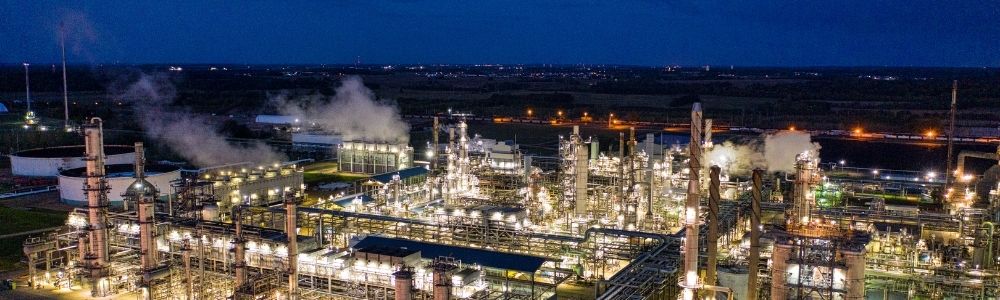
Kapville Energy implements structured continuous improvement programs specifically designed for the challenging context of energy and mining operations, where variability, complexity, and adverse conditions are constant. Our approach goes beyond the one-off implementation of tools – we seek to transform the organizational culture, creating companies that learn, adapt, and improve systematically and sustainably.
We develop continuous improvement systems based on established methodologies – Lean Manufacturing for waste elimination, Six Sigma for variability reduction, and TPM (Total Productive Maintenance) for maximizing equipment efficiency – but with profound adaptations that consider the particularities of the extractive sector. This includes: specific approaches for managing long-lifecycle assets, root cause analysis techniques for complex failures in remote environments, and indicator systems that capture both operational efficiency and safety and sustainability.
We implement structured improvement cycles that involve all levels of the organization, from strategic leadership to field operators. We establish continuous improvement committees, train internal multipliers (green belts, black belts), develop portfolios of improvement projects prioritized by impact and cost, and create recognition systems that encourage active team participation. We use tools such as Kaizen events for rapid improvements, DMAIC (Define, Measure, Analyze, Improve, Control) projects for complex problems, and suggestion systems that capture the tacit knowledge of employees.
We create infrastructure to support continuous improvement , including: operational data collection and analysis systems, visual dashboards (andon boards) that display real-time performance, situation rooms (war rooms) for problem analysis, and digital platforms for managing the improvement portfolio. We develop internal capabilities through training programs in quality tools, problem-solving techniques, and project management methodologies, ensuring that the organization can sustain and expand gains autonomously.
We have established mechanisms to support results , including: standardization of improved processes through operational procedures, regular compliance audits, periodic performance reviews, and governance systems that ensure continuous improvement remains a strategic priority. We monitor not only the financial results of improvement projects, but also their impact on safety, team engagement, and customer satisfaction.
The result is a transformation of the operational culture : organizations that not only solve problems when they arise, but proactively seek opportunities for improvement; teams that not only execute tasks, but question processes and propose innovations; leaders who not only manage results, but cultivate environments of learning and experimentation. We believe that continuous improvement is not a project with a beginning, middle, and end, but an ongoing journey that defines truly excellent organizations in the energy and mining sector.